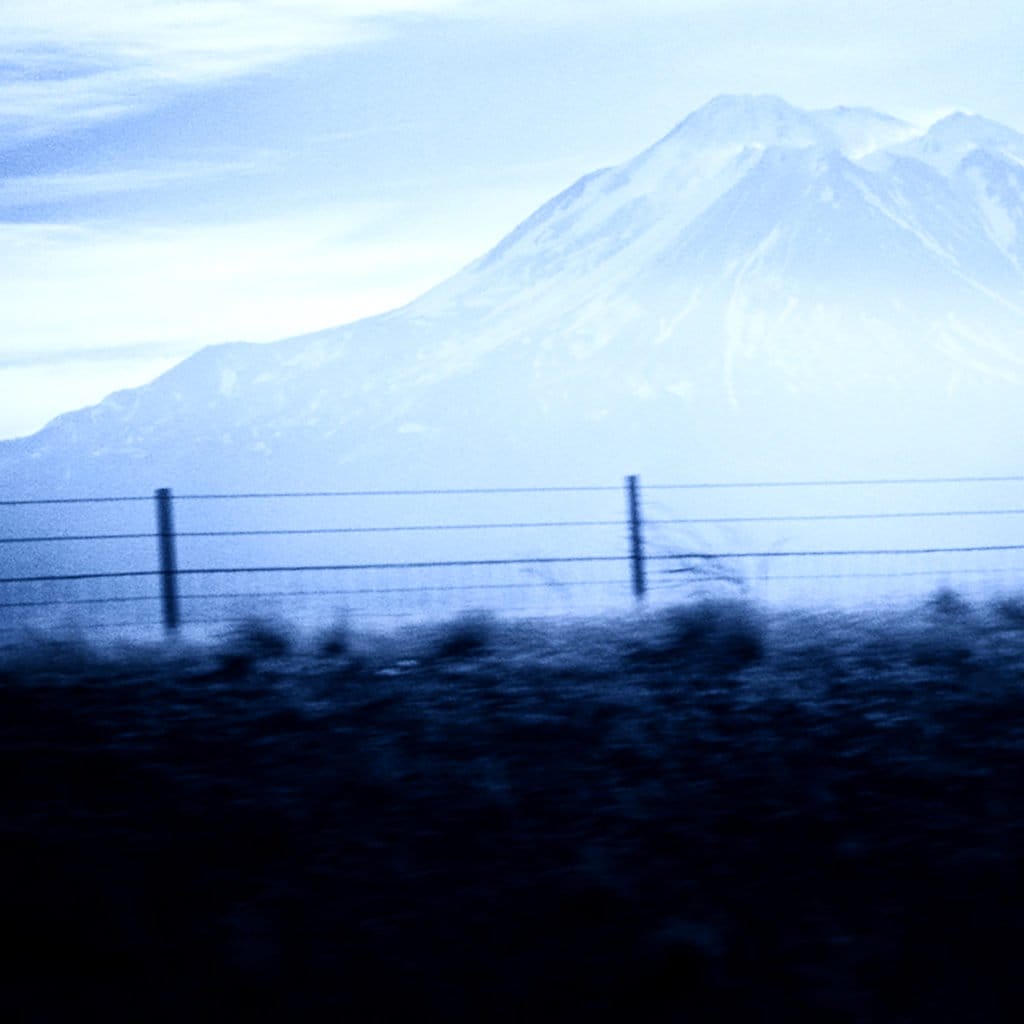
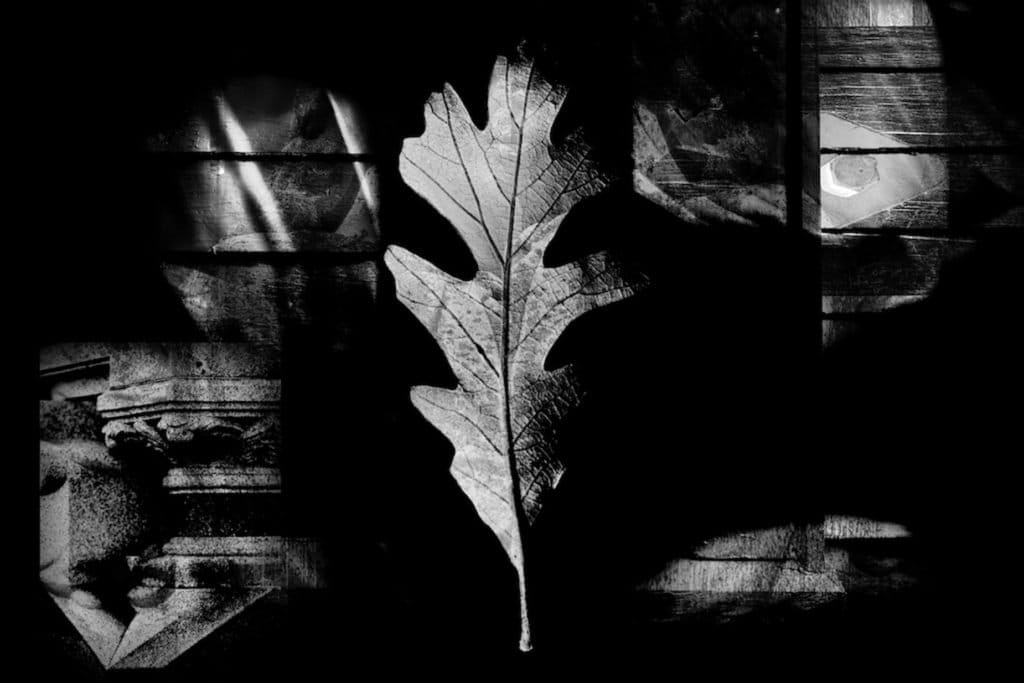
Raised in the American Midwest in what was once known as The German Triangle, Mr. Soetebier’s work explores what effect his Deutsch heritage, ancestral family, and the myths and traditions of his peoples have had on memory and the way he perceives and goes about the world. Mr. Soetebier received his Master of Fine Arts in Painting from the University of Florida in 1988 and taught drawing at the New World School of the Arts in Miami. He was an original member of the South Florida Art Center and later worked as a decorative painter in New York City and Los Angeles where he was also admitted into the Los Angeles Art Association. A frequent exhibitor at such events as The Other Art Fair by Saatchi, stARTup, and Conception; his work was recently included in the 79th Crocker Kingsley in Sacramento and a solo show at Acumen Gallery in Napa Valley. Jupp currently resides in Northern California with his wife and Leonberger dogs.
A German-born UK national, Rose Mary Boehm lives Lima, Peru. Author of one full-length poetry collection and two chapbooks, her work has been widely published in mostly US poetry journals. Her latest full-length poetry MS, ‘The Rain Girl’, has been accepted for publication in June 2020 by Blue Nib. Her poem, ‘Old Love’s Sonnet’, has been nominated for a Pushcart by Shark Reef Journal where it was published in the Summer of 2019.
Todd J. Donery is a Minneapolis based freelance photographer, photo assistant, camera operator, and stage hand. He earned his degree in photography and digital imaging at Minneapolis Community and Technical College. He has also attended Minneapolis College of Art and Design and studied film at Minneapolis Community College. Todd has had solo exhibits of his photography, and has also taken part in group exhibits. He has also had his work published in online journals and print publications. Todd has worked with musical acts to create album cover art, promo photos, event captures, and visuals for live performances. He likes to work with start-up businesses and small businesses photographing their products and personnel to help them build their presence and business. Todd also donates his time and talents to nonprofit organizations and fellow artists who are a tight budget, providing them with headshots, event photos, portfolio images, and original photographs for promotional use. Todd is a founding member of the Homewood Photo Collective. He manages the social media for the group and takes a key role in the production of group exhibits. Todd was also the Vice Chair of the Twin Cities Photography League. There he also manage the social media content, organized meetings with speakers, and played a key role in curating, promotion, and set-up of a group exhibit by the group.
A faint breeze blew through the shutters, bringing with it a trace of garlic and mussels from the nearby bistro. Oh God, Maître Barbier was known for his sensitive nose. He should have arranged for the bistro to close for the evening. As Pierre rose to go to the window his wife put her hand on his arm.
“Stay, Pierre. You must not be gone when Monsieur arrives.”
“But the smell! What if he notices? ”
“What if he does? It’s your night, isn’t it? Not his? Come, Pierre, sit down.”
Pierre been planning the Vernissage for months. Everything – lighting, temperature, ambiance – must be just so for the visit of Maître Barbier. It was an incredible coup to secure him for the opening. Pierre knew he was being unreasonable and took a deep breath. Everything that needed to be done had been done. He smiled at his wife then turned towards the door where a sudden flurry heralded the great man’s arrival.
Eventually, the introductions and speeches were done and Maître Barbier walked towards the central painting in the exhibition. It was of a tree in winter, bare branches stretching towards the sky in something like supplication. So many freezing days in the forest trying to capture the light between the branches, the yearning in their stretch and reach. Pierre sivered.
Maître Barbier leaned towards the painting, angling his head slightly, took a step backwards, then another. He approached the painting again, bending forward almost double. As if to sniff it, Pierre thought. The hush was palpable. Finally he turned to the assembled crowd.
“Competent”, he pronounced, then moved on, followed by his eager entourage.
Pierre made a quiet return to his position at the Bank later that year. How kind of them to hold it open for him, everyone said. A crise de folie, they said, this wanting to be an artist. And his wife, so patient. He would grow out of it.
Years later he watched the last leaves of that same tree drop soundlessly to the ground, propelled into their leaving by some invisible force. Gravity? Indifference? They might never have inhabited the branches, never have borne their vivid greenness with pride. Uncomplaining, they left behind the stark outline of their world. He mourned their loss and wished he’d known to come and look at the tree when it was at its best.
Carol A. Caffrey is an Irish writer and actor living in the UK. Her short fiction and poetry have been published by Lunch Ticket, Poetry Ireland Review, and The Mechanics’ Institute Review, among others. She has been shortlisted in a number of competitions and her Flash story “Vertigo”, nominated for best Small Fictions, won the BlakeJones Review Flash Fiction competition in 2019. She tours the one-woman play “Music For Dogs” by distinguished Irish poet and playwright Paula Meehan. Her debut poetry pamphlet “The Untethered Space” is published by 4Word Press in June 2020.
The phone is ringing I am sure the phone is ringing somewhere in the dark cave of my bedroom in the black void of sleep I know the phone is ringing.
The phone is not ringing. The phone is in the other room, plugged into its charger. It is not ringing. The phone is not ringing.
Something is wrong with the kids I know something is wrong with the kids deep in the fissures of my brain I know that something is wrong with the kids.
Nothing is wrong with the kids. Go back to sleep. It’s 3 a.m. Nothing is wrong with the kids.
*******************
Thirty-two years ago, as I lay asleep and unsuspecting after a glorious night, nature worked the way it often does, and I was invaded by another human being. Hospitably, I opened my womb to a developing life–my baby, our baby, a temporary visitor, a sublet for nine months or so.
I did not know he was colonizing. I did not know he was going to stick with me forever.
While I thought I was gestating, he was moving in. Fetal cells crossed the placenta into my blood stream, into my cells. Like stem cells, fetal cells can morph and change into the tissue they inhabit. Scientists discovered this when they found cells with Y chromosomes–male chromosomes–in a woman’s brain tissue.
Her son was right inside her head.
Further research has shown that this is much more common than anyone had previously believed. Apparently, we give birth, but apparently, they never quite move out.
*******************
They call them micro-chimeras, little bits of other people living inside of you, making cell lines, taking up residence in your head, in your heart.
These chunks are all mashed up like the chimera of Greek mythology—a monster with a lion head, snake for a tail, and rising out of the back of the beast, a goat head. The chimera breathed flames. It was an omen of disaster ahead—fire, shipwrecks, volcanoes.
The chimera was, of course, female.
*******************
Later, a sister, another colonizer. As her cells crossed the placenta into my blood, as they latched and landed and became one with my tissue, did they meet her brother’s cells? Did they wrestle, like Jacob and Esau, in my brain, in my heart? Or did they link up, united in their intrusion into my body?
How do they mingle, co-mingle, with each other and with me? Which one is the lion head, which one the snake? Which the goat head rising up from the center, bleating its dismay?
******************
Now they roar inside me in the middle of the night. Wake me in a blaze of panic because I know one or the other child is in trouble–struggling, despairing. Sometimes I am right. The phone is ringing, the kids are in trouble.
But my heart always knows before the phone rings. My brain knows before I am even fully awake. My boy, my girl, they will not let me go.
Kit Carlson is an Episcopal priest and a life-long writer with work appearing in publications as diverse as Seventeen Magazine and Anglican Theological Review. She is a Pushcart Prize nominee, recently published in Ponder Review, Bending Genres, and The Windhover. She is author of “Speaking Our Faith” (Church Publishing, 2018). She lives in East Lansing, Michigan, with her husband Wendell, and Lola, a nervous rescue dog. Find her at www.kitcarlson.org.
Featuring:
Issue 118, published April 2026, features works of poetry, flash fiction, short nonfiction, and visual art by Carston Anderson, Jack Bordnick Studio, Kenneth Boyd, Brian Builta, Robin Carstensen, Max Cavitch, Suhjin Chey, Lucinda Cummings, Jason Davidson, Greg Freed, Sharon Goldberg, Dara Goodale, Jane Hammons, Caroline Hayduk, Ken Holland, Dylan Hong, Michael Hower, Greta Kaluževičiūtė, Brian Kim, Minjae Kim, Matt Leibel, Scott Nadelson, Rina Park, Scott Penney, Michael C. Roberts, Jim Ross, R James Sennett Jr, Mia Sitterson, Dawson Steeber, Travis Stephens, Daniel Thompson, Josje Weusten, and M. Brooke Wiese.
48 Pages, 6 x 9 in / 152 x 229 mm, Premium Color, 80# White — Coated, Perfect Bound, Glossy Cover
To provide the best experiences, we use technologies like cookies to store and/or access device information. Consenting to these technologies will allow us to process data such as browsing behavior or unique IDs on this site. Not consenting or withdrawing consent may adversely affect certain features and functions (bookstore, announcements, submissions, etc).
Functional
Always active
The technical storage or access is strictly necessary for the legitimate purpose of enabling the use of a specific service explicitly requested by the subscriber or user, or for the sole purpose of carrying out the transmission of a communication over an electronic communications network.
Preferences
The technical storage or access is necessary for the legitimate purpose of storing preferences that are not requested by the subscriber or user.
Statistics
The technical storage or access that is used exclusively for statistical purposes.The technical storage or access that is used exclusively for anonymous statistical purposes. Without a subpoena, voluntary compliance on the part of your Internet Service Provider, or additional records from a third party, information stored or retrieved for this purpose alone cannot usually be used to identify you.
Marketing
The technical storage or access is required to send newsletters, calls for submissions, and for similar publishing purposes.
To provide the best experiences, we use technologies like cookies to store and/or access device information. Consenting to these technologies will allow us to process data such as browsing behavior or unique IDs on this site. Not consenting or withdrawing consent, may adversely affect certain features and functions.
Functional
Always active
The technical storage or access is strictly necessary for the legitimate purpose of enabling the use of a specific service explicitly requested by the subscriber or user, or for the sole purpose of carrying out the transmission of a communication over an electronic communications network.
Preferences
The technical storage or access is necessary for the legitimate purpose of storing preferences that are not requested by the subscriber or user.
Statistics
The technical storage or access that is used exclusively for statistical purposes.The technical storage or access that is used exclusively for anonymous statistical purposes. Without a subpoena, voluntary compliance on the part of your Internet Service Provider, or additional records from a third party, information stored or retrieved for this purpose alone cannot usually be used to identify you.
Marketing
The technical storage or access is required to send newsletters, calls for submissions, and for similar publishing purposes.